The minivan three garages could not figure out
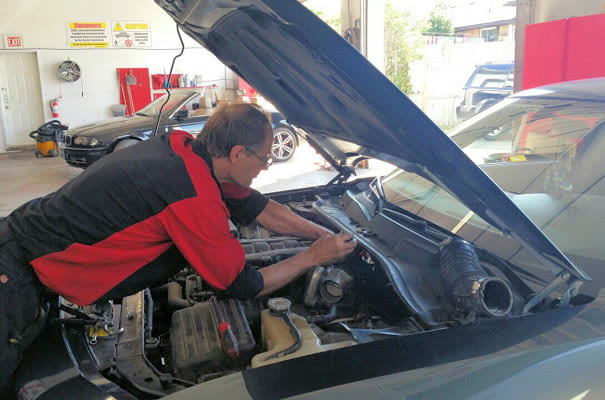
A customer once told us about a minivan that looked clean, drove smoothly and still went through a tank of gas in about half the distance it should have. Three other garages had run their tests and come up empty. Before the hood went up here, the mechanic asked how it ran, how many kilometres were on it, and whether there was ever a smell of gas while driving.
Those answers pointed at the injectors. On a high mileage engine they had worn, and each one was spraying more fuel than the engine asked for. The extra fuel did no useful work, and much of it went out the tailpipe. The repair took about three hours, and afterwards the van went roughly twice as far on a tank. Not every case is that tidy, but asking how the car behaves before reaching for a wrench is still how we start.
What the fuel system does
The pump in the tank pushes fuel through steel lines to the engine, where the injectors spray a measured amount into each cylinder. The engine computer decides how long each injector stays open, based on readings from the oxygen sensors, the air flow sensor, coolant temperature and more. Then it watches the exhaust and adjusts.
That self correction is why fuel problems hide well. If an injector leaks, the computer quietly trims fuel from all the cylinders to compensate, and the car feels fine. Only when the fault gets bigger than the computer can correct does the check engine light come on. By then you may have been paying for it at the pump for months.
How we test it
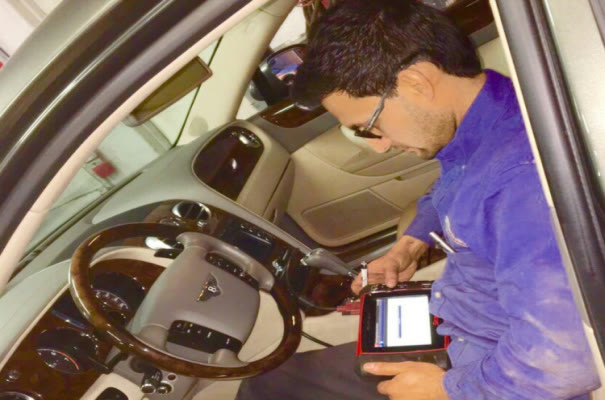
We start with questions and a scan. Fuel trim data from the engine computer shows whether it is adding or pulling fuel, and on which bank of the engine. Oxygen sensor readings and freeze frame data tell us under what conditions a fault set.
From there it depends on the car. A fuel pressure gauge shows whether the pump keeps up and whether pressure holds after the engine is shut off, which it should not lose quickly. A leak down there points at an injector or a check valve. Injectors can be checked for balance, one against the other, and listened to while running. On direct injection engines, which run very high fuel pressure, we look at the high pressure pump readings as well.
Diagnosis is $120 an hour before tax. We stop and call you with the answer before any parts are ordered, and the parts we replace are there for you to see afterwards.
Problems that show up in an Ottawa winter
Cold weather is hard on fuel systems. At minus 25 the fuel does not vaporize well, so a weak pump, a slightly leaking injector or a faulty coolant temperature sensor that makes the computer think the engine is warm shows up as a long crank or a stumble right after starting. Keeping the tank at least half full in winter also leaves less room for moist air, so less water condenses inside it.
Salt goes after the fuel lines and the straps holding the tank, the same way it attacks brake lines. A rusted steel line can weep fuel long before it fails outright, and a fuel smell around the back of the car in spring is worth taking seriously.
If you smell raw gasoline under the car, do not park it inside an attached garage until it is checked.
Carbon on direct injection engines
Many engines built in the last decade or so spray fuel straight into the cylinder rather than into the intake. It is efficient, but the fuel no longer washes over the intake valves, so oily vapour from the crankcase ventilation bakes onto them as carbon. Heavy deposits cause rough idle when cold, misfires and lost power. Bottled cleaners in the tank do not reach them. Cleaning the valves is a separate job that we can price once the deposits are confirmed.
Fuel system work we do
- Fuel pressure and volume testing
- Fuel injector testing and replacement
- Fuel pumps and fuel level sending units
- Fuel filters, where the car has a serviceable one
- Rusted fuel lines and tank straps
- Evaporative system leaks, purge valves and gas caps
- Intake and injector cleaning
An engine that runs rich for a long time can overheat and damage the catalytic converter, so fuel faults sometimes come with exhaust and converter work attached. When the trouble turns out to be ignition or compression instead, our engine repair page explains what comes next. Warning lights without a clear cause start with computer diagnostics.
Booking a diagnosis
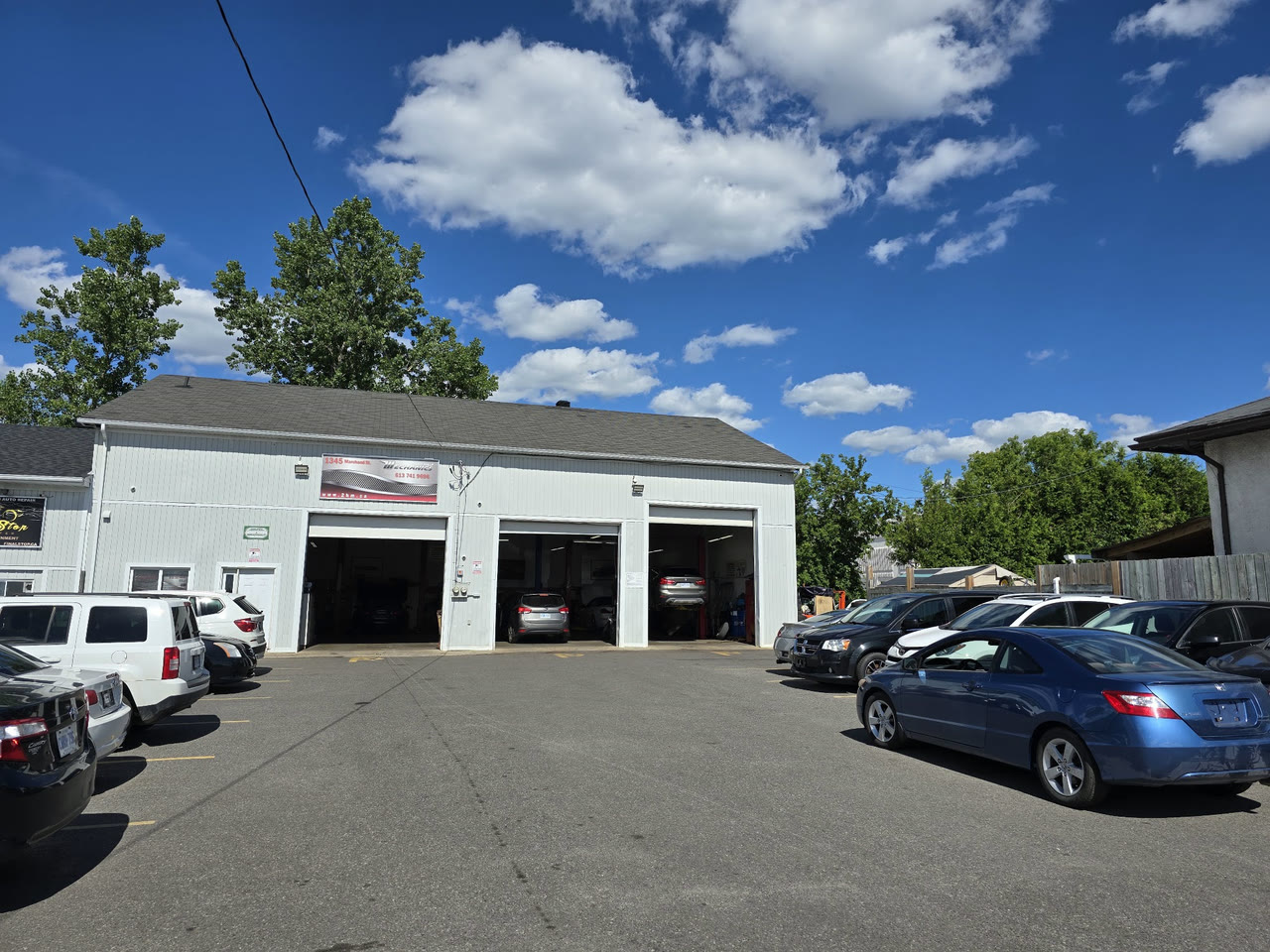
2 and 1/2 Mechanics is at 1345 Marchand Street in Cyrville, Ottawa, Ontario, and we work Saturdays from 8am to 3pm. Book a fuel system diagnosis, and in the notes tell us how far you get on a tank now compared with before, and when the problem started. That one number often saves an hour of testing.
Questions
Why is my car using more gas than it used to?
Common causes are a leaking or worn fuel injector, a thermostat that opens too early and keeps the engine cool, a faulty coolant temperature or oxygen sensor, and dragging brakes. Winter fuel blends and long warm up idles also cut mileage every year in Ottawa. A diagnosis compares what the engine computer sees with what the engine is really doing.
What are the signs of a failing fuel pump?
A fuel pump that is wearing out often makes the car crank longer before it starts, hesitate or lose power going up a hill or under load, or stall when hot. Some pumps whine from the back of the car. A fuel pressure test tells us whether the pump is weak or the problem is elsewhere.
Is it dangerous to smell gas from my car?
A raw fuel smell outside the car can mean a leaking line, injector seal or tank seam, and leaking gasoline near a hot exhaust is a fire risk. Do not park it in an attached garage until it has been checked. A smell only right after filling up is often a loose cap or a fault in the evaporative system, which is less urgent.
Do fuel injector cleaners work?
A bottle of cleaner in the tank can help with light deposits if used now and then. It will not fix an injector that is leaking, sticking or worn, and it does not reach the intake valve carbon that builds up on many direct injection engines. If the car already runs poorly, test it before spending money on additives.
How much does fuel system diagnosis cost in Ottawa?
At 2 and 1/2 Mechanics in Cyrville, fuel system diagnosis is charged as inspection time, $120 an hour before tax. The cause and a repair price come to you by phone before any parts are ordered or fitted.