When you need one
In Ontario, a used vehicle needs a Safety Standards Certificate before it can be plated in a new owner’s name. That covers most private sales and dealer sales, and any vehicle being registered here after coming from another province. A few transfers between family members are exempt.
A seller does not have to provide one. Many cars in Ottawa are sold as is, and the buyer takes on the job of getting the car to pass. If you are the seller, getting it inspected first tells you what you are selling. If you are the buyer of an as is car, budget for repairs before you agree on a price.
What the inspection covers
Ontario sets out what is checked for passenger cars and light trucks, and it is a long list. The main areas are these.
- Brakes, including pads, rotors, drums, hoses, steel lines and the parking brake
- Tires and wheels, for tread depth, damage and matching sizes
- Steering and suspension, including ball joints, tie rods, springs and shocks
- Lights and signals, headlights, brake lights, turn signals and reflectors
- Body and frame, for rust holes in structural areas, bumpers, doors, the hood latch
- Exhaust, for leaks and secure mounting
- Fuel system, for leaks
- Glass, wipers and washers, mirrors and the defroster
- Seat belts, the horn and the speedometer
Each item has a pass or fail line in the standard. A brake pad either has enough lining or it does not. That makes the result less a matter of opinion than people sometimes think.
Where Ottawa cars usually fail
Salt is behind most of it. Steel brake lines rust where they sit in their clips, fuel lines and tank straps corrode, and rocker panels and subframe mounts rot from the inside where water sits. Any rust hole in a part of the body that carries load is a fail.
Potholes account for the next group. Loose ball joints, worn tie rod ends and broken coil springs all show up regularly, and so do bent rims and tires with sidewall bulges. After that come the small things that are easy to overlook in your own car, such as a dead licence plate bulb, a wiper that streaks, a crack in the windshield in front of the driver, or a seat belt that will not retract.
The certificate itself
Since March 31, 2025, Ontario Safety Standards Certificates are issued electronically through the province’s DriveON program, by inspection stations licensed to do so. The old paper form is gone, and the record is tied to the vehicle.
Repairs to pass
The inspection is the easy part. What takes time is the list of items that would fail. We write that list down for you with a price for each repair, parts and labour, and call you before starting any of them. Nothing is replaced without your approval, and the old parts are kept for you to see.
Most of the work on that list is what we do every day. Brake lines, pads and rotors are on our brake repair page. Ball joints, tie rods and springs are covered under suspension and steering. Bulbs, wipers and cloudy headlight lenses are part of our general auto repair work.
A car with a failed brake line or a broken spring should not be driven until it is repaired, even if it is only a few days from being sold.
A safety is not a health check
A car that passes is safe to drive on the day it passed. That is all. It can still need a transmission next month, and the inspection does not test how much life is left in the engine. If you are buying, have a pre purchase inspection done as well, ideally before you hand over any money, so you know what you are taking on beyond the legal minimum.
Booking
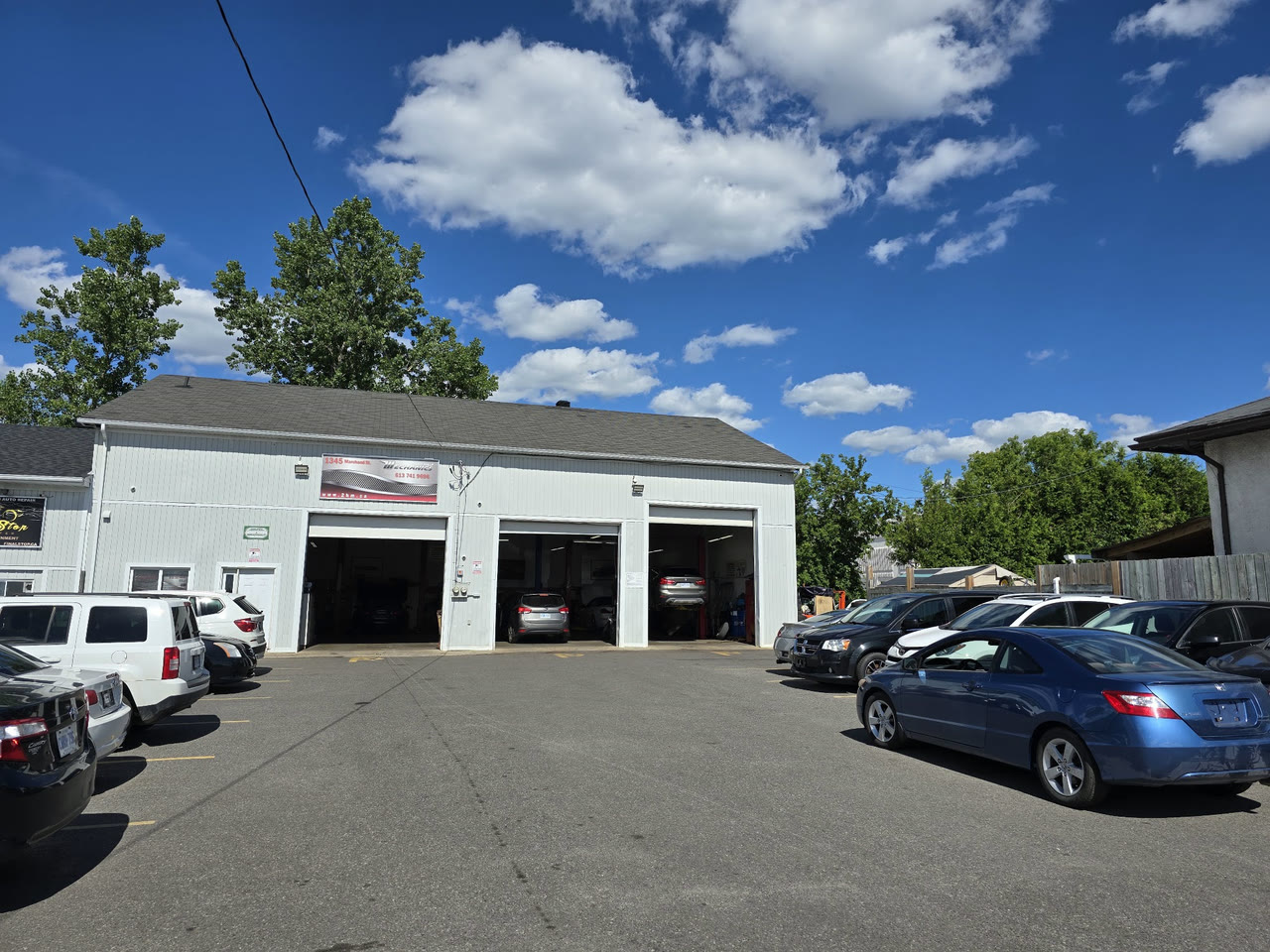
2 and 1/2 Mechanics is at 1345 Marchand Street, Ottawa, ON, near the St. Laurent Shopping Centre and about 300 m from Cyrville O-Train station. Saturday hours, 8am to 3pm, help when you are buying privately and the car is only free on a weekend. Book online, choose Inspection, and say in the notes that it is for a safety and whether you are buying, selling or registering the vehicle.
Questions
When do I need a safety certificate in Ontario?
A Safety Standards Certificate is needed to put plates on a used vehicle in a new owner's name, with a few exceptions for transfers between family members. It is also needed to register a vehicle brought in from another province. A car can be sold without one, but the buyer then needs a certificate before plating it.
What fails a safety inspection most often in Ottawa?
On Ottawa cars the usual failures are rusted brake lines, worn pads and rotors, loose ball joints and tie rod ends, rust holes in structural parts of the body, worn tires, burned out bulbs and cracked windshields in the driver's view. Most of these come down to salt and age. The repairs are quoted before any work is done.
How long is an Ontario safety certificate valid?
A Safety Standards Certificate is valid for 36 days from the date of the inspection. If the car is not registered to the new owner within that window, it needs a new inspection.
Does a safety certificate mean the car is in good condition?
No. It means the car met Ontario's minimum safety standard on the day it was inspected. It says nothing about how long the engine, transmission or other major parts will last, which is why buyers should also get a pre purchase inspection.
How are safety certificates issued in Ontario now?
Ontario now issues Safety Standards Certificates electronically through its DriveON program, from inspection stations licensed by the province. The paper certificate has been replaced by an electronic record tied to the vehicle.