When the temperature gauge starts to climb
Most cooling systems fail slowly and then all at once. A small leak drops the coolant level week by week until one hot afternoon in traffic on St. Laurent Boulevard the needle climbs. If that happens, turn off the A/C, turn the heater to full hot with the fan on high, and get off the road somewhere safe.
If the needle keeps rising, shut the engine off and let it sit. Never open the radiator cap or the coolant tank on a hot engine, since the coolant is under pressure well above boiling and can spray out. Driving on while it overheats risks a warped cylinder head or a failed head gasket, which our engine repair page covers, and that costs a lot more than any radiator.
Finding the leak under pressure
Coolant leaks hide. The system runs pressurized when hot, so a joint that drips at operating temperature can look dry on a cold engine in the morning. The test that finds them is a pressure test. With the engine cold, a hand pump brings the system up to its normal pressure, and we watch the gauge and look for where coolant appears. The radiator cap gets tested on its own, since a weak cap lets coolant boil off.
Common places a car leaks coolant in Ottawa:
- The plastic end tanks of the radiator, where they crimp onto the aluminum core.
- Plastic coolant reservoirs and their caps, which crack with age and repeated freezing.
- The water pump, which weeps from a small hole under the seal when the seal wears.
- Heater hoses and the clamps on them, especially at the back of the engine.
- Plastic thermostat housings and coolant pipes, which go brittle from heat.
If the system holds pressure and the level still drops, a combustion gas test checks the coolant for exhaust gas, which would point at the head gasket.
Coolant type and freeze protection
Coolant comes in several chemistries, and the colours are not a reliable guide anymore. Mixing types can make the corrosion inhibitors drop out as sludge, so the system gets refilled with what the manufacturer specifies.
The mix matters as much as the type. A half and half mix of ethylene glycol coolant and water protects to roughly minus 37. Topping up with plain water all summer weakens that, and a cold January night can freeze the coolant in the block. Ice expands, so frozen coolant can push out the engine’s core plugs or crack the radiator. Checking the freeze point in the fall takes a few minutes.
Thermostats, fans and water pumps
The thermostat is a valve that keeps coolant in the engine until it warms up, then opens to the radiator. Stuck closed, the engine overheats quickly. Stuck open, it never fully warms up, fuel economy drops and the cabin heat suffers, which overlaps with our heating and A/C work.
Electric fans pull air through the radiator when the car is moving slowly. A car that runs hot in traffic but cools down on the 417 usually has a fan, relay or fan control problem. One that is fine in town but creeps up at highway speed points more at a blocked radiator or a worn pump. On many engines the water pump is driven by the timing belt, so if the belt is nearly due, both are usually done together.
Salt, debris and radiator fins
The radiator sits behind the A/C condenser at the front of the car, collecting road grime, bugs and a winter of salt spray. Corroded fins crumble and stop shedding heat, and the gap between the condenser and radiator packs with debris. A radiator that looks fine from the front can be half blocked behind.
Flushes, bleeding and getting it back
When coolant is changed or a part is replaced, the system has to be bled of air. Some engines have bleed screws, others need the system filled under vacuum, and an air pocket left behind can cause overheating or no heat. Coolant changes on schedule are also listed under fluid services.
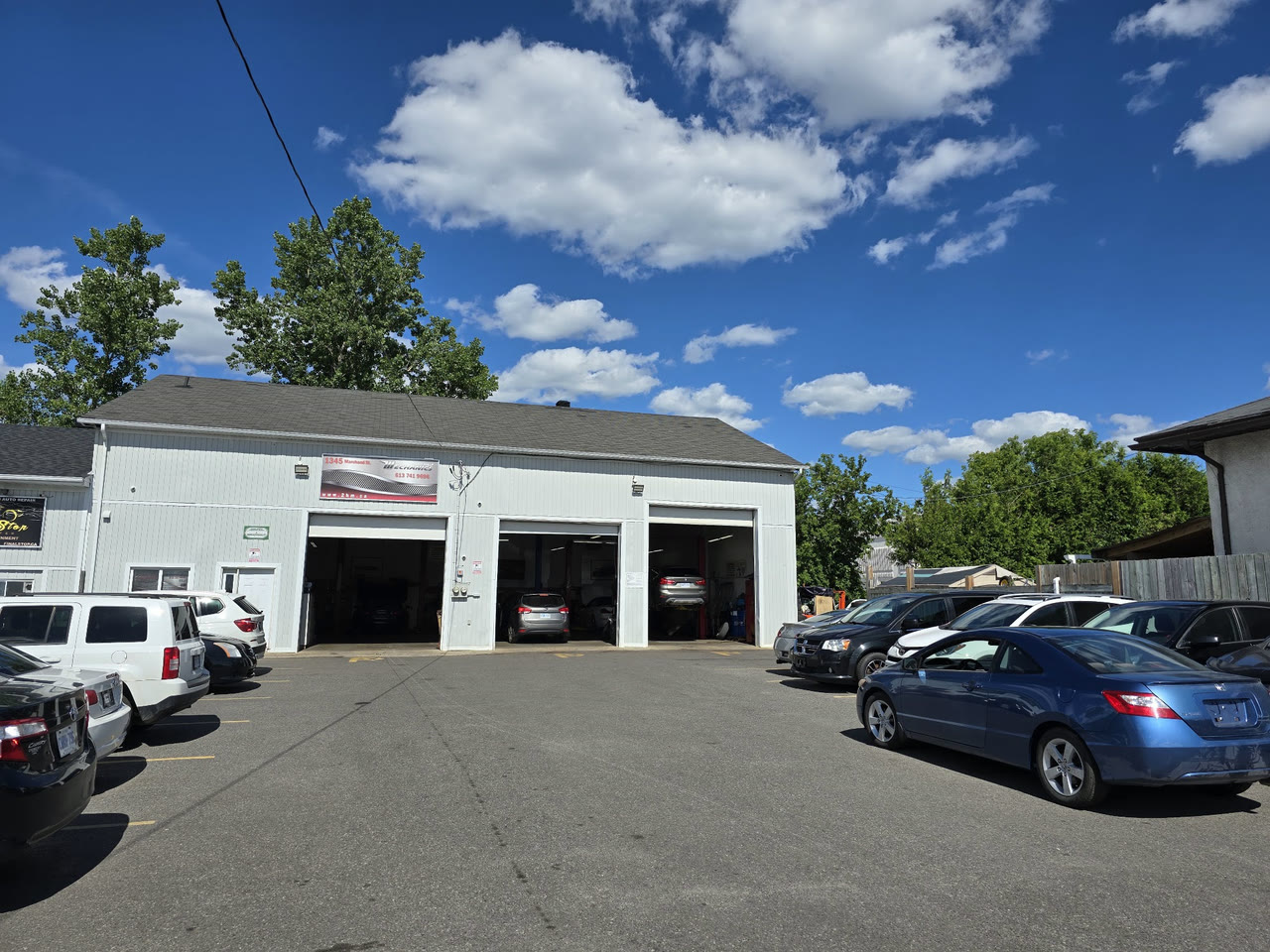
Cooling system testing at 2 and 1/2 Mechanics is $120 an hour, before tax. You are shown the cracked tank or the worn pump before deciding on the repair. The shop sits at 1345 Marchand St in Cyrville, Ottawa, Ontario. Drop off by 9am and walk to Cyrville O-Train station, or come Saturday between 8am and 3pm. Book online and mention if the gauge has moved.
Questions
What should I do if my car starts overheating?
Turn off the A/C, then turn the heater to full hot with the fan on high, which pulls some heat away from the engine. Pull over somewhere safe and shut the engine off if the gauge keeps rising. Do not open the radiator cap or coolant tank while the engine is hot.
Why is my car losing coolant but there is no leak?
Some leaks only drip while the system is hot and under pressure, then dry up before you look. Coolant can also escape onto a hot engine and evaporate, or leak inside through the heater core. If none of those show up, the coolant may be getting into the cylinders through a head gasket, which a combustion gas test can confirm.
How often should engine coolant be changed?
Most current cars use long life coolant with an interval measured in many years and a high kilometre figure, listed in the owner's manual. Older cars with traditional green coolant need it more often. Coolant that is rusty, oily or has a low freeze point should be changed sooner regardless of the schedule.
Can I top up my coolant with plain water?
In an emergency in summer, water will get you home. In an Ottawa winter it dilutes the antifreeze and raises the temperature at which the mix freezes, which can crack a radiator or engine block. Top up with the coolant type your manual specifies, mixed or premixed to the right strength.
Is it safe to drive with a coolant leak?
A slow seep with the level held between the marks can usually be driven to the shop. A fast drip, steam from under the hood or a temperature gauge above normal means stop. An engine run hot even once can warp the cylinder head.