The jobs between the big jobs
Most of what goes wrong with a car is not dramatic. A bulb burns out, a belt starts to squeal, the headlights get dim and cloudy, the wipers leave streaks. None of it stops you driving, but all of it makes the car worse to live with, and some of it, like a dead brake light, will get you pulled over or fail a safety.
These are quick jobs, and the easiest way to get them done is alongside something else. If your car is coming in for an oil change or a tire swap, mention the bulb or the squeal in the booking and we will price it while the car is here.
Belts and tensioners
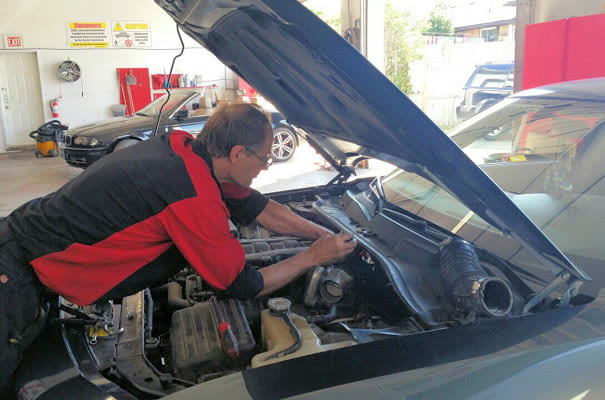
Most engines run their accessories off one long ribbed belt, the serpentine belt. It turns the alternator, the A/C compressor, often the water pump and, on older cars, the power steering pump. A spring loaded tensioner keeps it tight.
Modern belts wear by losing rubber from the ribs rather than by cracking, so a belt can look fine and still slip. The classic sign is a squeal on a damp cold morning that fades after a minute. A chirp at idle, a growl from the front of the engine, or a tensioner arm that shakes while the engine runs all point to a worn tensioner or idler pulley bearing.
If the battery light and the temperature gauge both climb at once, the belt may have come off, so stop as soon as it is safe. A broken belt that drives the water pump can overheat the engine within a few minutes. When the battery light comes on by itself, the cause is more often the alternator or wiring, and our electrical repair page covers that.
Bulbs
Headlights, brake lights, turn signals, fog lights, licence plate lights. A burned out bulb is a ticket waiting to happen, and in a dark Ottawa December a dim headlight makes a real difference on an unlit road.
Some bulbs come out in a minute. Others hide behind a bumper cover, a wheel liner or the battery, which is why bulb replacement is quoted per car. Headlight bulbs usually wear in pairs, so if one has gone the other is often dim, and replacing both keeps the light even. With halogen bulbs, the glass should not be touched with bare fingers, since the oil from your skin makes a hot spot and shortens the bulb’s life. If a bulb keeps failing, or a light flickers, the problem is often a corroded socket or ground wire, and that gets fixed instead of feeding it bulbs.
Headlight lens restoration
Almost every headlight lens on the road now is plastic. The factory gives it a clear protective coat, and after years of sun, salt and car washes that coat breaks down and the lens turns yellow and hazy. The light behind it can lose a lot of its reach.
Restoring them means wet sanding away the damaged layer, polishing the lens clear, and sealing it with a new UV protective coat. The last step matters. Skip it and the lens goes cloudy again within months. When a lens is cracked, or moisture has got inside, restoring the outside will not help and the headlight assembly has to be replaced instead.
Wipers and washers
Salt film is the Ottawa wiper problem. A blade that is slightly worn will smear brown slush into a glare you cannot see through at night. Winter blades, with a rubber boot over the frame, stay flexible in the cold and keep ice from packing into the joints.
We also look at the other half of the system. Washer pumps fail, nozzles clog or freeze, and hoses split, usually in January when you need them most. Keep a winter washer fluid rated to minus 40 in the reservoir from November on.
Windshield chips
A small chip left alone tends to spread into a crack once the glass goes through a few freeze thaw cycles or a blast of defrost on a cold windshield. A crack in the driver’s view is also a common reason for a car to fail a safety.
Something else not on the list
The booking page has an Other option for anything that does not fit a category. Describe it in a sentence or two, attach a photo or a short video if it helps, and we will tell you whether it is something we can take on. For warning lights or faults you cannot pin down, start with computer diagnostics instead, billed at $120 an hour.
Where we are
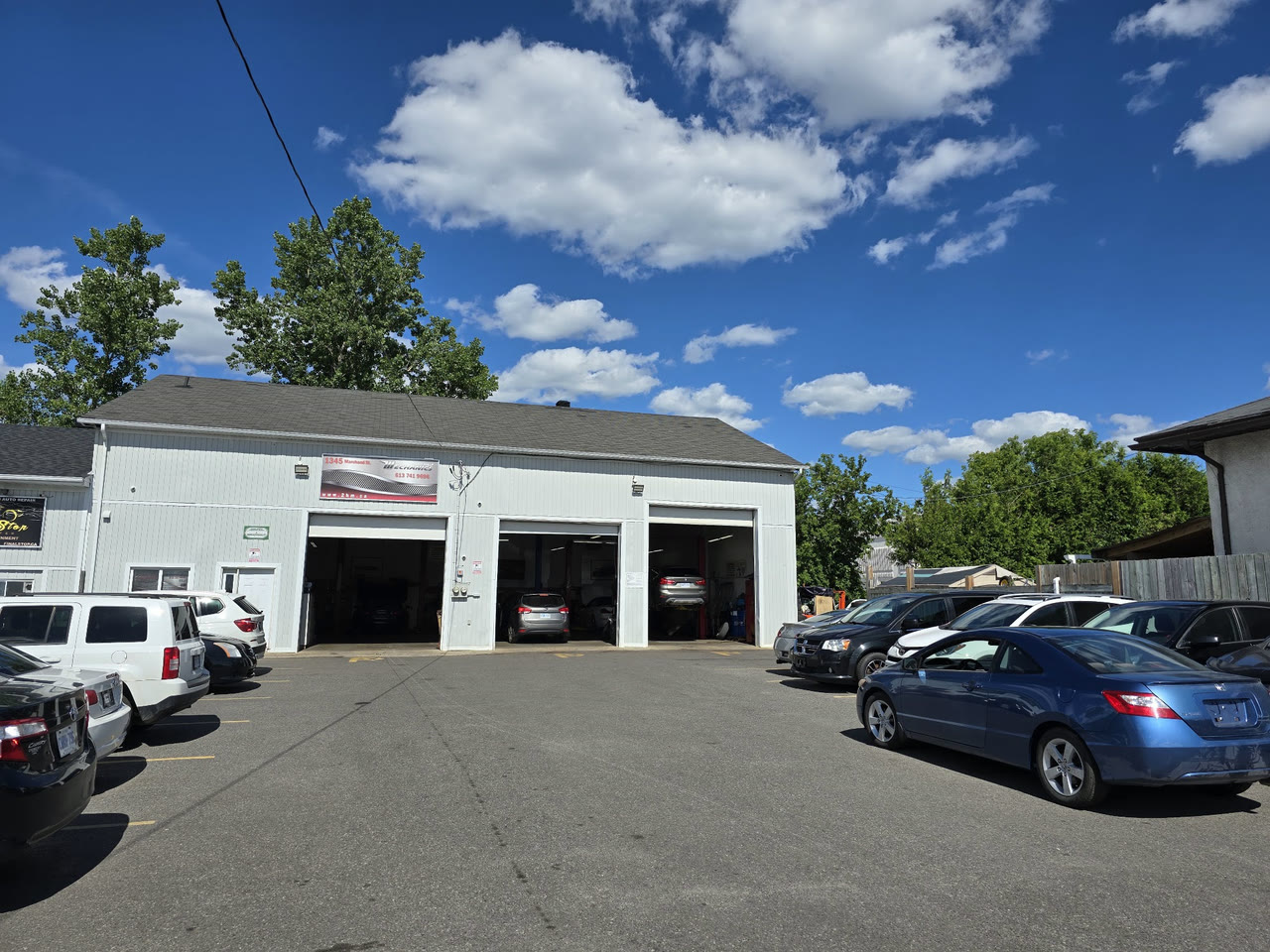
2 and 1/2 Mechanics is at 1345 Marchand Street in Cyrville, Ottawa, ON, about a kilometre east of the St. Laurent Shopping Centre. We are open weekdays 8am to 5pm and Saturdays 8am to 3pm. Book online whenever it suits you and drop the car off by 9am on the day.
Questions
Why does my car squeal when I start it on cold mornings?
A squeal for the first few seconds after a cold start is usually the serpentine belt slipping on its pulleys. The belt may be glazed or stretched, or the tensioner that keeps it tight may be weak. Both are cheap compared with what happens when the belt breaks.
How much does it cost to replace a headlight bulb in Ottawa?
On some cars it is a five minute job, and on others the bumper cover or a wheel liner has to come off to reach the bulb, so the price depends on the vehicle. At 2 and 1/2 Mechanics we quote it for your car before starting. It is often easiest to add to an oil change or other visit.
Can yellow headlights be restored?
In most cases yes. The yellow haze is the outer layer of the plastic lens breaking down in the sun. Sanding off the damaged layer, polishing and then sealing it with a new UV protective coat restores the light output, and the coat is what keeps it from going yellow again quickly.
How often should I replace my wiper blades?
Most blades last about a year in Ottawa. Salt film, ice scraping and summer sun wear the rubber edge, and a blade that streaks or chatters should be replaced. Many drivers switch to winter blades in the fall, which have a rubber boot that keeps ice out of the frame.
What happens if my serpentine belt breaks?
The battery light usually comes on because the alternator stops charging, and the steering gets heavy if the car has a hydraulic pump. On many engines the same belt drives the water pump, so the engine will overheat within minutes. Pull over safely and shut the engine off.