Start with the fluid and the codes
A surprising number of transmission complaints turn out to be something outside the transmission. Low fluid from a leaking cooler line, a faulty speed sensor, a shift solenoid with a bad connector, or software that needs updating can all produce shifting that feels like the gearbox is failing.
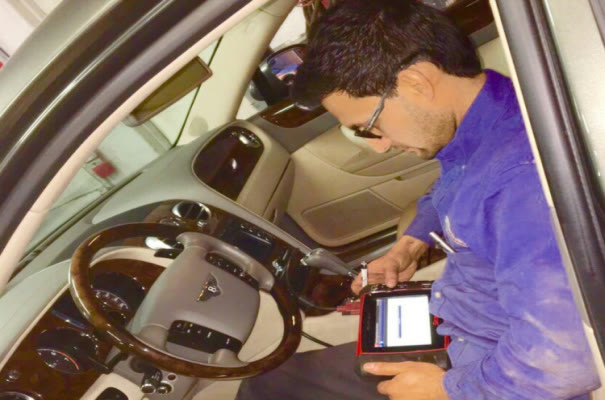
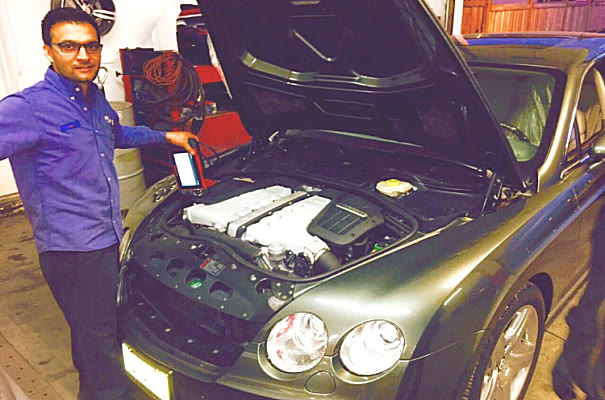
So the first step is reading the codes in the transmission control module and checking the fluid. Many newer cars have no dipstick, and the level has to be checked at a fill plug with the fluid at a set temperature. Dark fluid that smells burnt, or a magnet coated in fine metal paste, tells a different story than clean red fluid that is simply low. Testing is billed at $120 an hour, before tax, and the car diagnostics page explains how that time is used.
Automatic, CVT, dual clutch and manual
Each type fails in its own way, and knowing which one your car has helps describe the problem when you book.
- A conventional automatic that slips will flare, with the revs jumping during a shift. A harsh clunk into Drive or Reverse often points at mounts or the valve body.
- A CVT has no fixed gears. Wear shows up as a whine, a shudder pulling away, or the feeling that the car is stretching a rubber band to accelerate.
- A dual clutch automatic tends to shudder or hesitate at low speed in stop and go traffic.
- A manual with a worn clutch slips on hills or when passing, and the clutch grabs near the top of the pedal. Grinding into a gear points at worn synchros or a clutch that is not fully releasing.
Cold mornings and snowbanks
At minus 25 transmission fluid is thick, and the first few shifts on a cold morning can be firm or late. Some of that is normal and goes away once the car warms up. Giving the car a minute before driving off helps, then drive gently for the first few kilometres while everything comes up to temperature.
Two winter habits do real damage. Shifting into Drive while the car is still rolling backward strains the internal parts. Rocking a car out of a snowbank by spinning the wheels at high revs overheats the fluid quickly. A few short tries, then a shovel, is cheaper.
Leaks, axles and the driveline
Red or brown fluid under the front of the car is often transmission fluid. On many vehicles the fluid runs through steel cooler lines to the radiator, and those lines rust in Ottawa salt until they weep or burst. Axle seals and the pan gasket are the other usual leaks.
Past the transmission, front wheel drive cars use CV axles. A clicking noise on tight turns, such as backing out of a parking spot, is a worn outer CV joint, usually after a torn boot let salt and grit in. Rear wheel drive cars and pickups have driveshafts with universal joints, and all wheel drive vehicles add a transfer case and differentials that need their own fluid. Those fluid changes are listed under fluid services.
Shift cables and small parts
Not every shifting problem is internal. If the lever moves but the car does not go into the gear shown, or the selector will not go into Park, the cause is often a shift cable or a small bushing at the end of it. A customer once told us he had spent more than three weeks hunting for shift cable bushings before we sourced them in under 30 minutes. Small parts like that are cheap once you find them.
Repair, replace or remanufactured
Once the cause is known, the options usually come down to three:
- An outside repair, such as a cooler line, sensor, solenoid, wiring or a software update.
- A fluid service, when the fluid is worn but the transmission is not.
- A replacement with a remanufactured or used unit, when the internals are worn out.
You get a price for each option that applies, and nothing is ordered until you decide. The old parts come back to you to see. If the engine is the real cause of a shudder, such as a misfire under load, that work moves over to engine repair.
Getting the car here
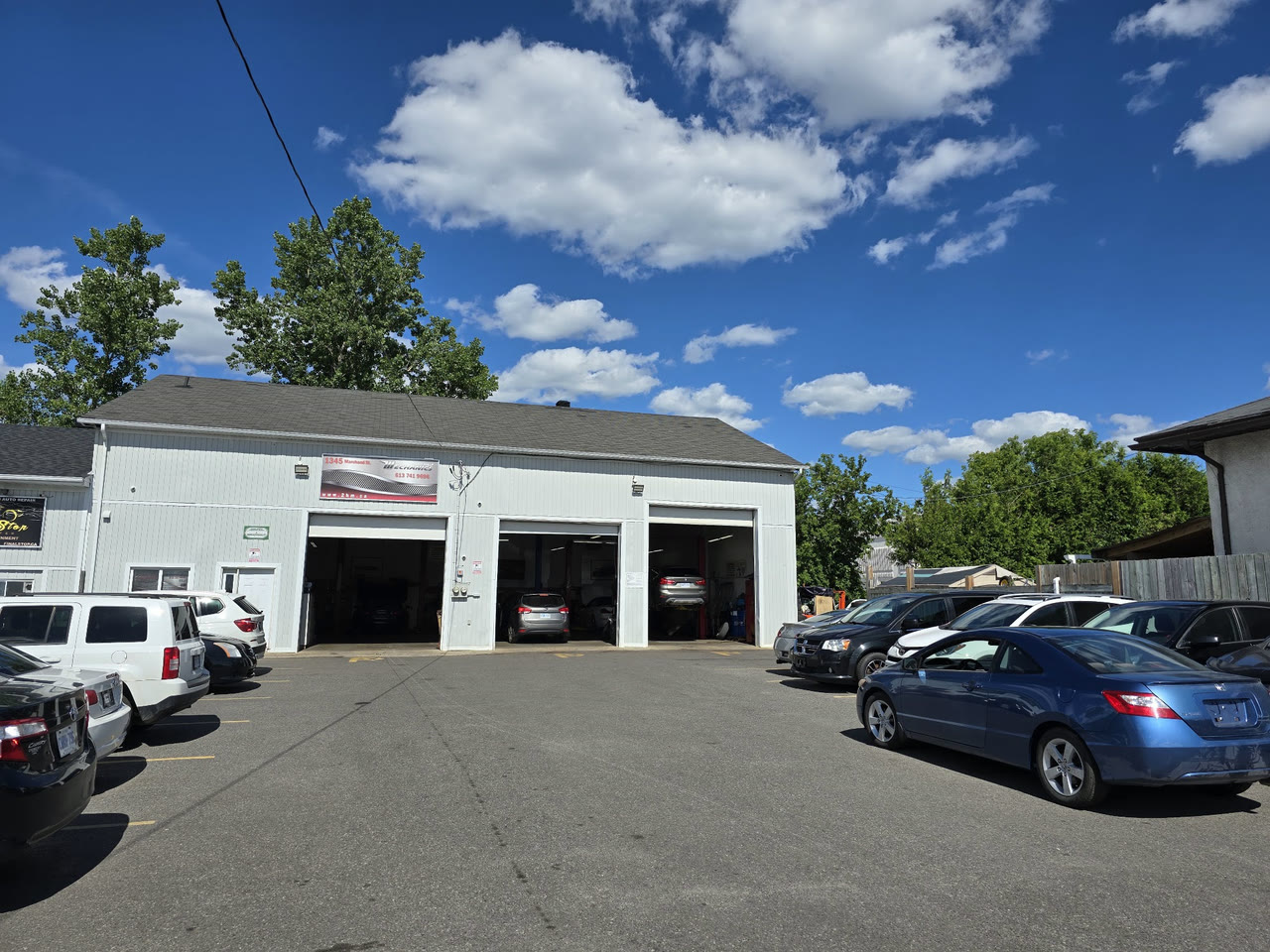
If the car still moves normally, drive it in gently. If it will not go into gear, call (613) 741-9696 before trying to drive it. You will find 2 and 1/2 Mechanics at 1345 Marchand St in Cyrville, Ottawa, ON. Drop it off by 9am and walk to Cyrville O-Train station, or come by on a Saturday. Book a transmission check online any time.
Questions
How do I know if my transmission is slipping?
The engine revs climb but the car does not speed up to match, often during a shift or when pulling away. It can feel like a brief neutral between gears. Slipping usually gets worse once the fluid is hot, so it is often more noticeable after a long drive.
Should I change the transmission fluid on a car with high kilometres?
Usually yes, if the fluid is in reasonable shape, using the exact fluid your manufacturer specifies. If the fluid is already burnt and full of debris, a change on a slipping transmission rarely cures it. We look at the fluid first and tell you which situation you are in.
Why does my CVT whine or shudder?
A CVT uses a steel belt or chain between two pulleys, and worn fluid or wear on those parts can cause a whine, a shudder from a stop, or a rubber band feeling when accelerating. Some faults are helped by fresh fluid of the correct type or a software update. Others mean the unit is worn, which a test drive and the stored codes help confirm.
Is it normal for an automatic transmission to shift hard when it is very cold?
Some firmness in the first few minutes on a very cold morning is normal, because the fluid is thick until it warms. If the hard shifts continue once the car is warm, or come with a warning light, have it checked. Give the car a minute or two before driving off at minus 25.
How much does it cost to diagnose a transmission problem in Ottawa?
At 2 and 1/2 Mechanics a transmission check is billed at $120 an hour before tax. That covers reading the transmission codes, checking the fluid and a road test. You get a call with what was found and the price of the repair before any work starts.