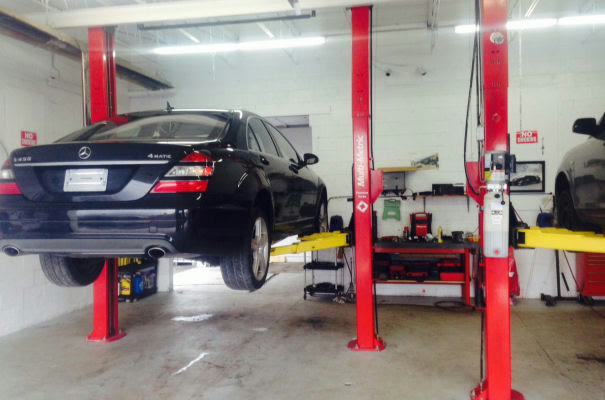
Why exhaust systems fail here
Rust gets the exhaust from two sides. Outside, the pipes and muffler hang under the car in the spray of salty slush all winter. Inside, burning gasoline makes water vapour, and on a short drive the system never gets hot enough to boil it off. That water condenses in the muffler, mixes with combustion acids and sits there.
Ottawa winters are full of exactly those short drives. A five minute run to the grocery store at minus 20 barely warms the tailpipe, so mufflers here often rot from the inside out. The first sign is usually a rusty drip from a small hole at the bottom, then a deeper note, then a roar.
What the sound tells us
Different failures sound different, and the sound helps us find the leak quickly.
- A deep rumble that gets louder when you accelerate is usually a hole in the muffler or a pipe rusted through.
- A tinny buzz at one engine speed, often at idle, is a loose heat shield.
- A ticking from the engine bay that is loudest on a cold start and fades as the engine warms is often a cracked exhaust manifold or a broken manifold stud. The metal expands when hot and closes the gap, which is why the noise goes away.
- A clunk over bumps from under the car can be a broken hanger letting the pipe swing into the body.
- A hiss or puff near the front of the car is usually a failed gasket or a split flex pipe.
How we inspect it
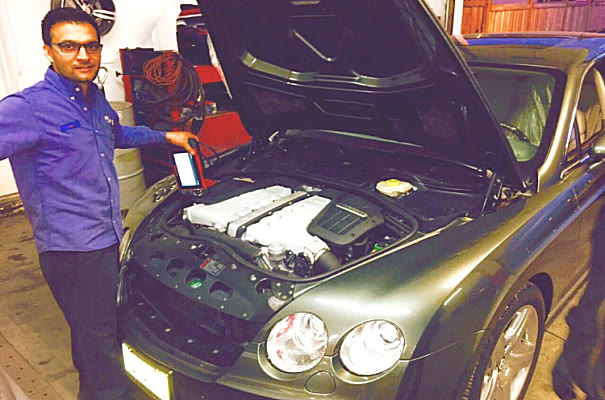
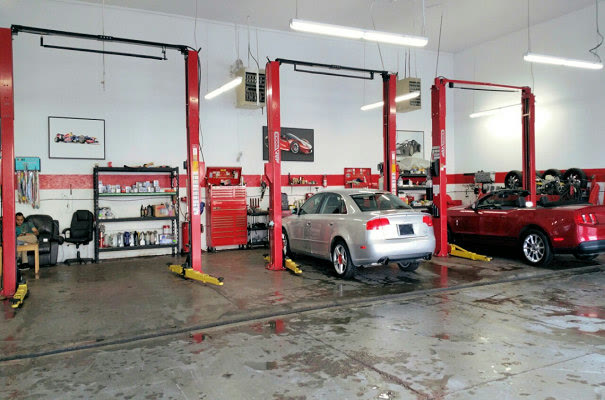
With the car on a lift, we follow the exhaust from the manifold back to the tailpipe. We look for black soot around joints, which marks a leak, and check every hanger and clamp. With the engine running, small leaks show themselves by sound and by feel. We also look at how much life is left in the parts around the failure, since there is no point fitting a new muffler to a pipe that will let go next winter.
Exhaust inspection time is $120 an hour before tax, and the job is usually quick to diagnose. We call you with what has failed and what each fix would cost. Often a single rusted section can be replaced on its own, and we will tell you when that is a sensible choice and when the rest is too far gone. Fasteners on old exhausts are usually rusted solid, so cutting them off is normal and is built into the quote.
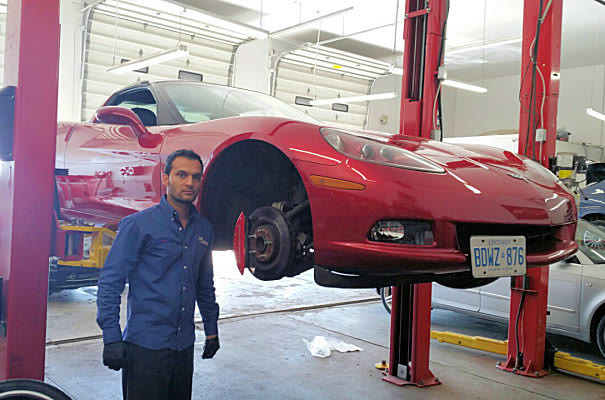
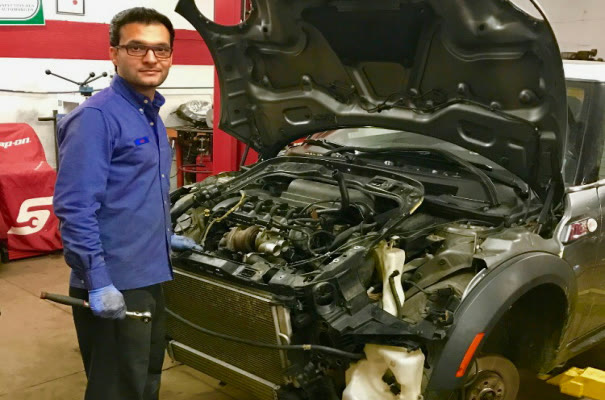
Catalytic converters and the check engine light
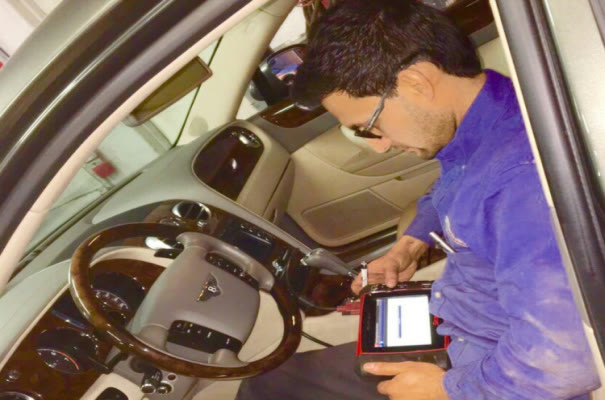
The catalytic converter cleans the exhaust before it leaves the car. Oxygen sensors before and after it tell the engine computer whether it is doing its job. When the converter wears out, the readings start to look alike, and the computer sets a code such as P0420.
A converter code does not always mean the converter is the problem. An exhaust leak ahead of a sensor can confuse it, a lazy oxygen sensor can report wrong, and an engine that misfires or runs rich will overheat and ruin a new converter quickly. So we check those first with computer diagnostics before recommending an expensive part. If the engine is the root cause, that gets fixed first, and our engine repair page covers misfires and the rest.
Converter theft happens in Ottawa too. If your car started roaring the morning after it sat in a parking lot, look underneath for a section of pipe that has been sawn through.
Carbon monoxide and snowbanks
Exhaust leaks are a safety problem, not only a noise problem. A leak under the floor can bring carbon monoxide into the cabin, and you cannot smell it. If you smell exhaust inside the car, drive with the windows open and get it checked.
A blocked tailpipe does the same thing. If your car is stuck in a snowbank or buried by the plow, clear the snow away from the tailpipe before you sit in it with the engine running.
What we work on
- Mufflers and resonators
- Front pipes, intermediate pipes and tailpipes
- Flex pipes and gaskets
- Exhaust manifolds and manifold studs
- Catalytic converters and oxygen sensors
- Hangers, clamps and heat shields
- Dual exhaust systems
Leaks are also on the list for an Ontario safety inspection, which is why exhaust work often comes up right before a sale.
Booking
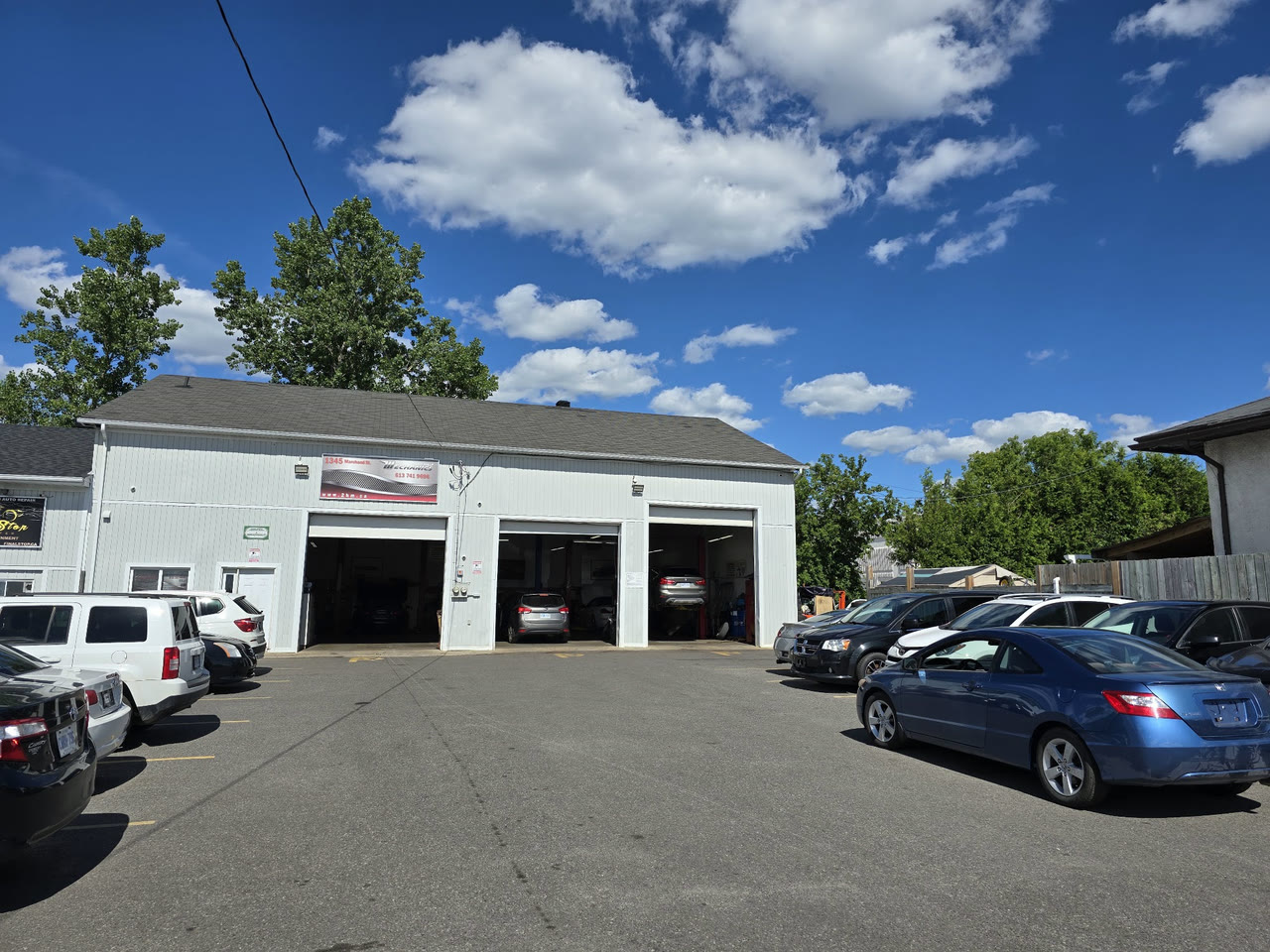
2 and 1/2 Mechanics is at 1345 Marchand Street, Ottawa, ON, a few minutes on foot from Cyrville O-Train station. We are open weekdays 8am to 5pm and Saturdays 8am to 3pm. Book online any time, choose Inspection, and describe the noise. A short phone video taken from beside the car with the engine running helps more than you would think.
Questions
Why is my car suddenly so loud?
A sudden roar usually means a pipe has rusted through, a flex joint has split, or a muffler has come loose from its hanger and opened a joint. Once in a while it is a catalytic converter that was cut out overnight. Any of these is easy to see with the car up on a lift.
Is it dangerous to drive with an exhaust leak?
It can be. Exhaust contains carbon monoxide, which has no smell of its own, and a leak under the cabin can let it inside, especially at idle with the windows closed. If you smell exhaust inside the car or feel headachy or drowsy while driving, open the windows and have it checked before driving much further.
What is the rattle under my car at idle?
The most common cause is a heat shield whose spot welds or clamps have rusted away, so the thin metal buzzes against the pipe. It often gets louder at a certain engine speed. Shields can usually be secured or removed, depending on where they sit and what they protect.
How much does exhaust repair cost in Ottawa?
It depends on which section has failed and what the parts cost for your car. At 2 and 1/2 Mechanics an exhaust inspection is billed at $120 an hour before tax, and you get a price for the repair before any work starts. Often only one rusted section needs replacing, not the whole system.
Does Ontario still require an emissions test?
No. Ontario ended Drive Clean emissions testing for passenger vehicles in 2019. Exhaust leaks are still checked on a safety inspection, though, and a failing catalytic converter will still turn on the check engine light.