Click, slow crank or nothing at all
What happens when you turn the key, or press the button, says a lot about where the fault is.
- Rapid clicking with dim dash lights is almost always a low battery.
- A slow, laboured crank that finally catches points at a weak battery or corroded cables.
- One loud click and then silence, with bright lights, suggests the starter or its wiring.
- Nothing at all, with lights working, can be the ignition switch, the park or neutral switch, a blown fuse or the security system not recognizing the key.
- The engine cranks normally but never fires, which is usually fuel, spark or immobilizer, and moves over to car diagnostics.
Why batteries die in January
A battery makes power through a chemical reaction, and cold slows it down. On a minus 25 morning the battery has much less cranking power available, at exactly the moment a cold engine with thick oil needs more of it. Summer heat does the long term damage, and the first deep cold snap finishes the job.
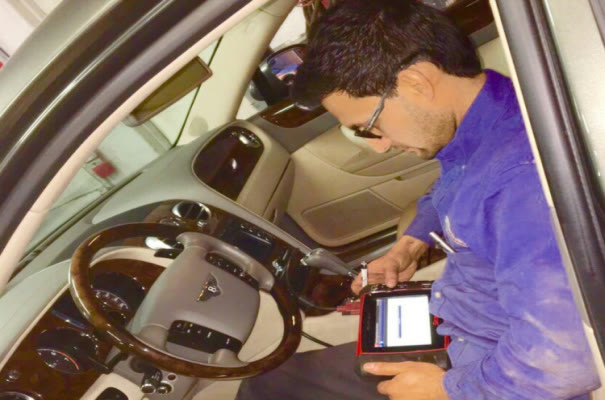
Every battery has a cold cranking amps rating on its label. A load or conductance tester compares what it can deliver now with that rating, and that tells you more than whether it started the car this morning. Terminals get checked for the white or green crust that builds up and blocks current. Some newer cars with start stop systems use AGM batteries that have to be registered to the car with a scan tool after replacement, so the charging system knows a new one is fitted.
A battery that keeps going flat
A new battery that goes dead again within weeks means the battery was not the real problem. There are two possibilities. Something is drawing power while the car is off, or the car is not putting back what it uses.
For the first, a parasitic draw test measures current at the battery once every module has gone to sleep, then pulls fuses one at a time until the draw drops. Common culprits are a trunk or glovebox light, a module that never shuts down, a stereo or remote starter wired in years ago, and an alternator leaking current back through a failed diode.
For the second, look at how the car is used. Short winter trips with heated seats, the rear defroster and the blower on high can use more power than ten minutes of driving puts back.
Alternators and the charging system
The alternator keeps the battery topped up and runs everything electrical while the engine is on. When it starts to fail you may see a battery light, headlights that dim at idle and brighten with revs, or a whine from the front of the engine. Output is tested at idle and with the lights, fan and defroster switched on, along with the drive belt that turns it. Replacing a battery without testing the alternator is how people end up buying two batteries in one winter.
Lights, windows, locks and gauges
The rest of the electrical work is a long list of small circuits, each with its own failure. Power windows that stop halfway usually need a regulator, though the motor or switch can be at fault. Door locks freeze or their actuators wear out. Gauges that drop to zero together point at the cluster or a ground. Headlight sockets corrode, and salt water finds its way into the connectors near the wheels.
Heater controls and blower fans overlap with our heating and A/C work. Whatever the circuit, it gets tested with a meter at the connector before a part is replaced, and if the problem is a corroded wire rather than a failed motor, that is the cheaper fix you get offered.
Stuck at the St. Laurent Centre
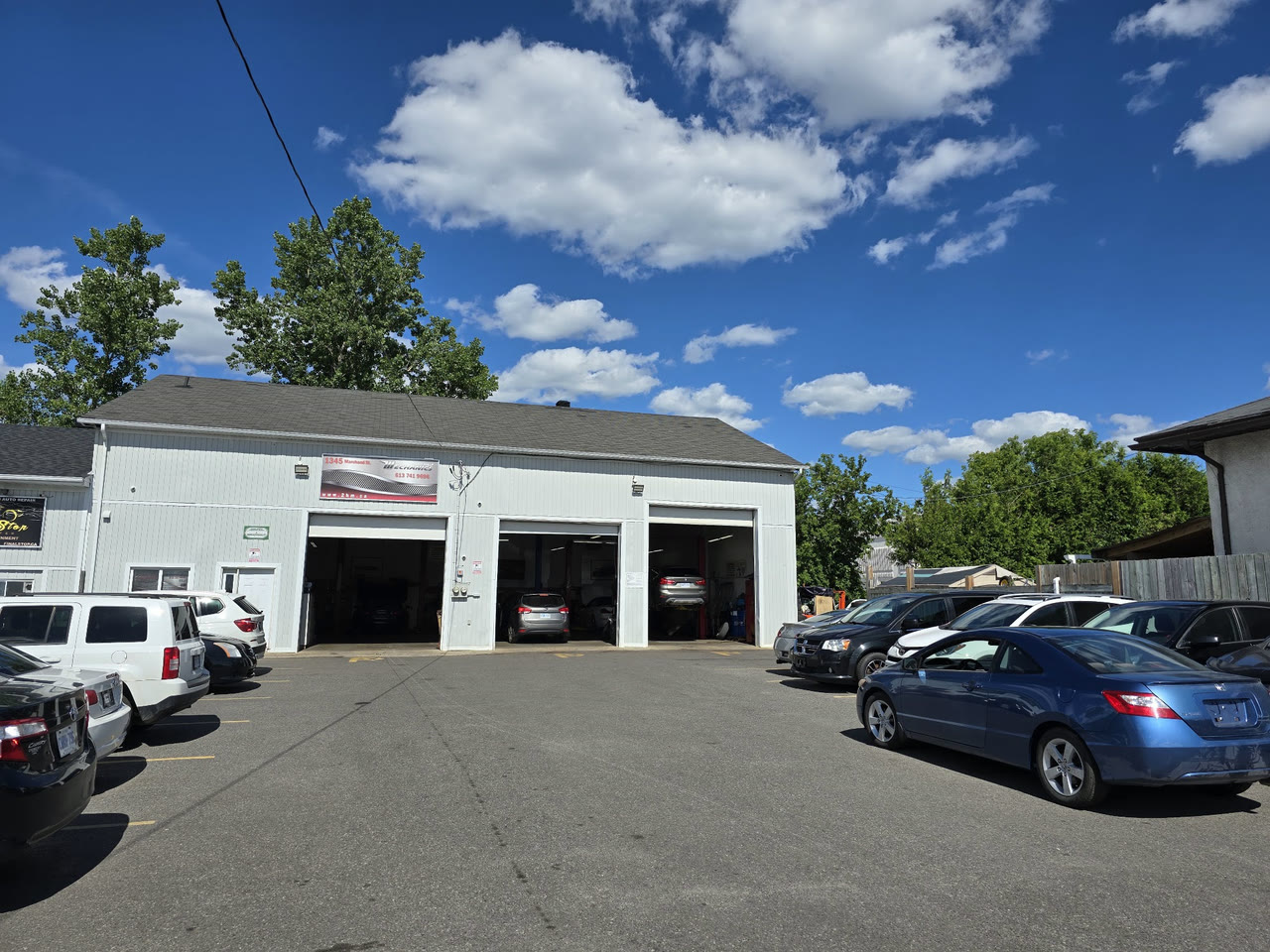
2 and 1/2 Mechanics sits about a kilometre east of the St. Laurent Shopping Centre, close enough to walk. A customer once told us his car refused to start in that parking lot. He walked over, one of the mechanics drove him back to the car, and it was fixed within the hour. Every situation is different, but if you are stranded nearby, call (613) 741-9696 and ask.
Booking electrical testing
Electrical testing is $120 an hour, before tax. The shop is at 1345 Marchand St in Cyrville, Ottawa, Ontario. Leave the car by 9am and Cyrville O-Train station is four minutes away on foot. Saturday hours run 8am to 3pm. Book online, say when the fault happens and how long the car had been parked, and you will get a call with the findings before any repair.
Questions
Is it the battery or the alternator that is failing?
A battery problem usually shows up as a slow crank or no start after the car has sat, while the car runs fine once started. An alternator problem shows up while driving, with a battery light, dimming lights or a car that dies on the road. Testing both takes a few minutes and avoids replacing the wrong one.
How long does a car battery last in Ottawa?
Often somewhere between three and five years, though heat in summer and deep cold in winter both shorten it. Batteries are usually weakened in the summer and then fail on the first very cold morning. A load test in the fall shows if yours will make it through.
Why does my car battery keep dying overnight?
Either something is drawing power with the car off, or the battery is not getting fully charged. Common draws include a glovebox or trunk light that stays on, a module that does not go to sleep, and aftermarket accessories. A parasitic draw test measures the current and tracks it down circuit by circuit.
What does it mean when my car clicks but will not start?
Rapid clicking usually means the battery has enough power to work the starter solenoid but not to turn the engine. A single loud click with good lights points more at the starter itself or a poor connection to it. Corroded battery terminals can cause either.
Can an aftermarket remote starter cause a dead battery?
It can, if it was installed with a poor connection or a module that stays awake. Remote starting also means short runs that use battery power without driving long enough to replace it. If the battery trouble started after a remote starter went in, mention it when you book.